Everybody teaches you how to start a business. Nobody prepares you for what starting one does to you.

When your feelings about the business change, it doesn't always mean the business is the problem.

Buzz-Free Business helps founders recognize what's influencing their decisions, understand what their business needs from them now, and navigate the shift into the operating phase.

Keep reading
Two founders in conversation over coffee, shown as silhouettes against a sunlit window
The Honeymoon

You start with an idea you are extremely excited about. You learn everything about your business idea, try anything to get it started, and figure things out as you go.

You eat, sleep, dream, and talk about your business 24/7. This is your life.

Then the business starts needing more from you. And something changes.

What just happened? Welcome to the human side of owning a business.

Starting is just the beginning.

What happens when the honeymoon ends?

Then the parts you don't love start showing up.

You love creating — but hate selling.

You keep putting off the numbers.

You're tired of posting.

Customers aren't responding the way you expected.

You're starting to wonder if this was such a good idea.

And that new idea suddenly looks really interesting...

Don't confuse the end of the honeymoon with the end of the business.

The Pattern

Are you building a business — or restarting the honeymoon?

Idea
Excitement
Friction
Doubt
New Idea

Some people aren't serial entrepreneurs.
They're serial starters.

Before You Start Over

Is the business not working — or is the honeymoon simply ending?

A loss of excitement can feel like evidence that something is wrong.

Lack of excitement isn't business data.

Before walking away, look for evidence.

Is there evidence of demand?

Is there an economic path?

Have you actually given the business a fair test?

Before you decide what to do next, ask a better question:

Before You React

What the heck is happening?

Entrepreneurs are wired to act. Something feels wrong and we immediately want to fix it. So we work harder, pivot, buy something, hire someone, change direction, or chase another idea.

Notice first. Then decide.

The Buzz comes from everywhere.

After years of building businesses and working alongside founders, I began to notice that the things pulling us away from clear thinking tended to come from five places. Those patterns became the five types of buzz. Tap each to explore.

Buzz from around you

Buzz from within you

The problem isn't that the Buzz exists.

The problem is when you don't realize it's influencing your next decision.

Being Buzz-Free isn't about eliminating all the noise.

It's about recognizing what's influencing you so you can decide what actually deserves a voice in your business.

The Buzz-Free Method

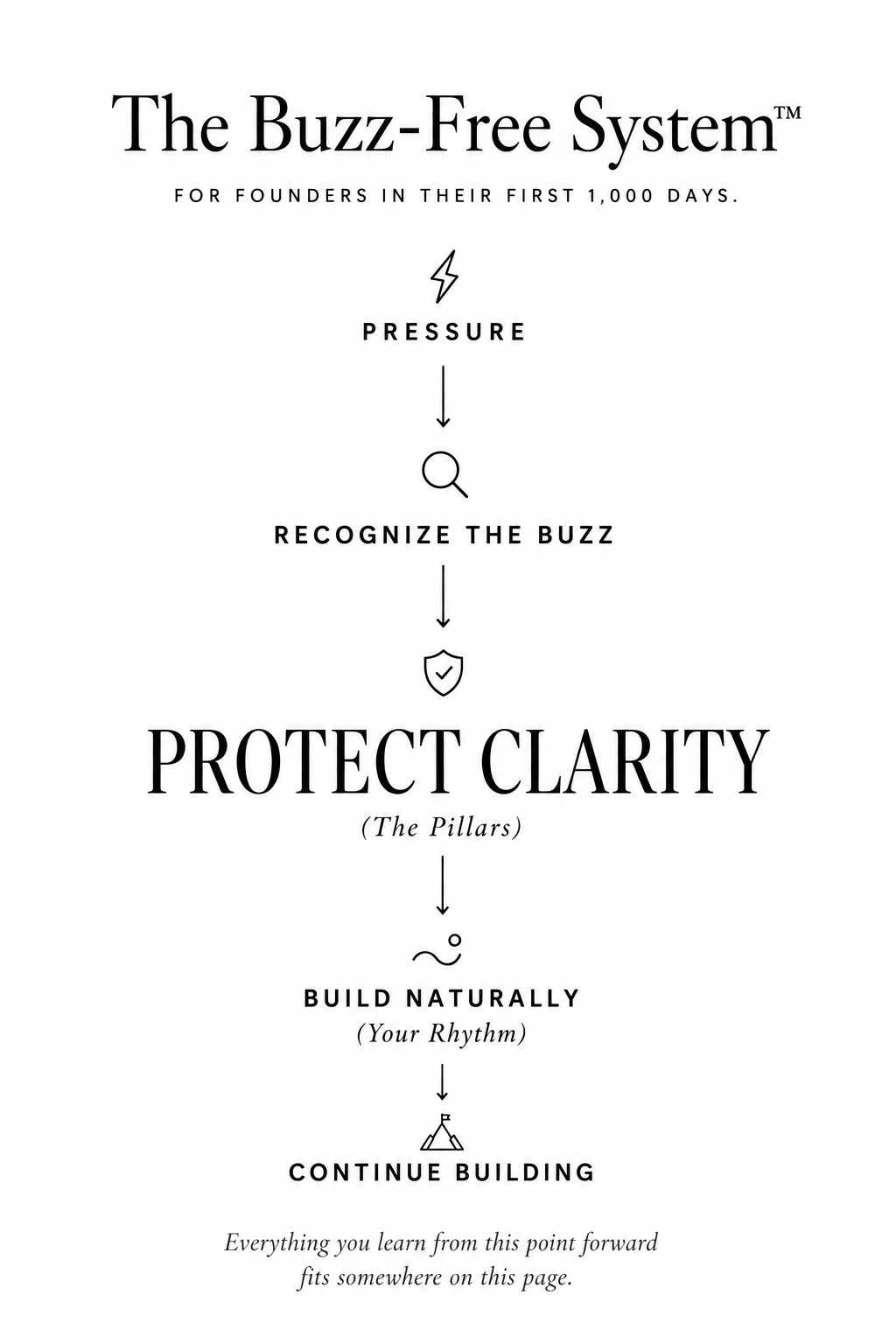
Once you understand what's influencing you, the five stabilizing pillars show you where the business may need your attention.

PACEENERGYFOCUSMONEYENVIRONMENT

Five stabilizing pillars

RHYTHM

The activation pillar

Excitement starts businesses.
Rhythm builds them.

The Shift

The business changed. Did you?

The person you needed to be to start the business may not be the person the business needs now. Before you decide something is wrong with the business, check whether your role is changing.

You may still be operating from the role that got the business started.

The hustler.
The salesperson.
The fixer.
The one who did everything.

Those roles helped build the business.

But eventually, the business may need something different from you.

That shift can feel uncomfortable enough to make you question the business itself.

Swipe to read the full chart

Swipe or scroll the chart below to read it.

The Shift: founders move from Builder (create, explore, imagine) to Operator (decide, organize, sustain)

Not every change in how you feel is a signal to leave, pivot, or start over.

Before you question the business, understand how your role may be changing.

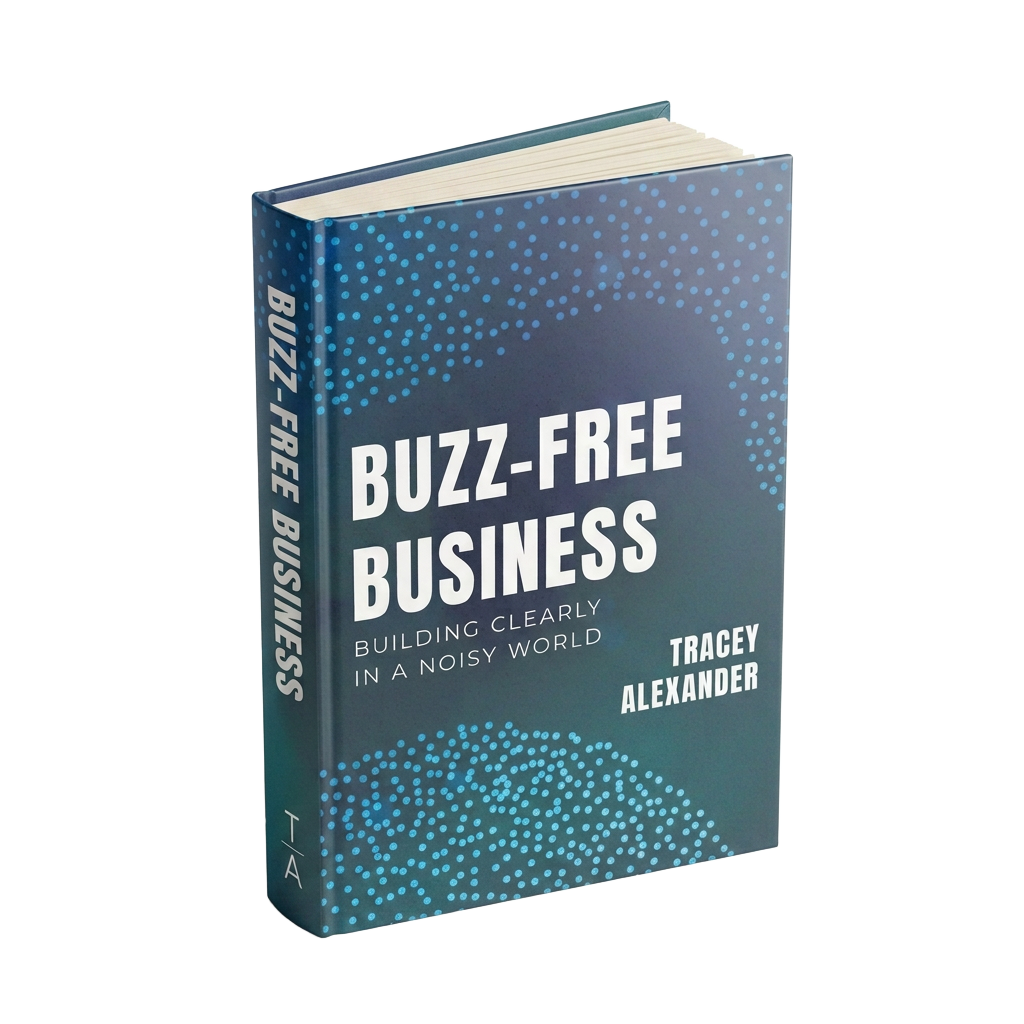
Buzz Free book 3D cover
Tracey Alexander
The Book

Buzz-Free Business.

Building Clearly in a Noisy World

A practical guide to separating what you're feeling from what the business is actually telling you, so you can understand what's happening before you decide what to do next.

What's creating Buzz in your business?

Explore the Buzz-Free diagnostic.